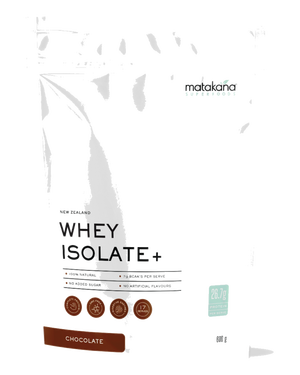
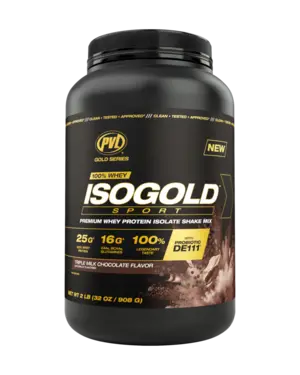
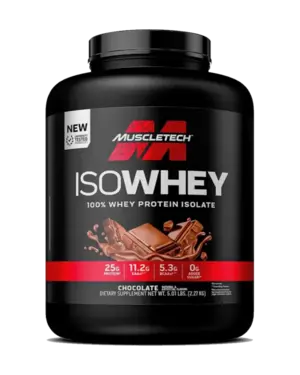
Why ranked here?
The strongest public testing library in this set, with a clean four-ingredient formula. Exact whey origin varies by production run.
View full assessment ↗
SUPPLEMENT INDEXCompare 50 whey protein isolate brands by protein content, ingredients, testing and value.
The strongest public testing library in this set, with a clean four-ingredient formula. Exact whey origin varies by production run.
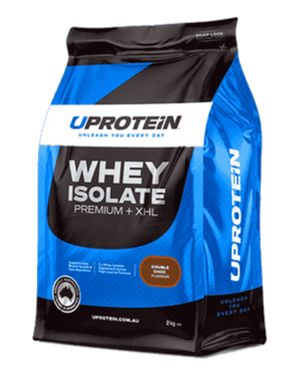
View full assessment ↗The Double Chocolate (Stevia) label declares 83.2g protein per 100g. It remains a strong value choice, but no longer receives the purity advantage created by comparing an unflavoured formula with flavoured competitors.
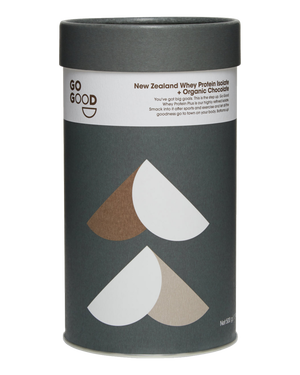
View full assessment ↗Go Good’s official Organic Chocolate nutrition panel declares 84.5g protein per 100g (25.4g per 30g serve). The figure was previously missed because the nutrition panel is embedded as an image rather than exposed in the product-page text. Its current Australian one-time price still reduces the value result.
View full assessment ↗Excellent social proof and value. It competes more on price and range than on highly curated premium positioning.
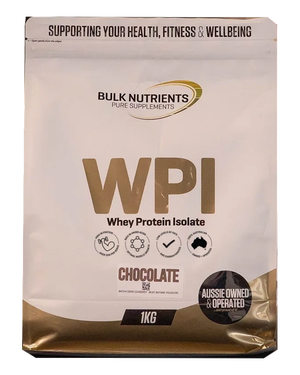
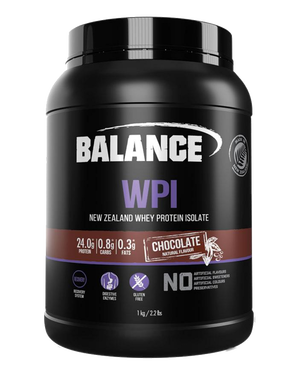
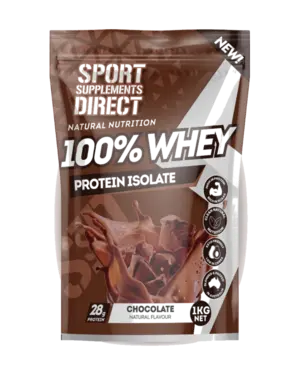
View full assessment ↗The current official Chocolate listing declares 80.4g protein and 4.5g sugar per 100g, A$84.99 for 1kg and 4.7 stars from 3,195 reviews (checked 22 September 2026). Sugar above 4g per 100g reduces Product quality by four points. The lower price raises Value one point and the flavour-specific review rating lowers Customer experience one point; the overall score remains 78. Its finished-product tests remain a strength.
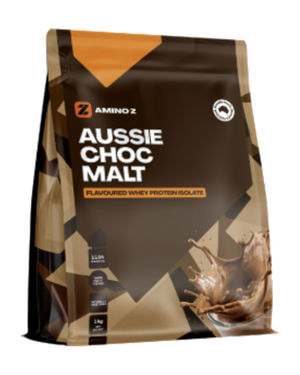
View full assessment ↗Bulk wins on protein concentration and price compared with Amino Z, and ranks ahead under the Best price lens. Its lower overall result reflects less accessible finished-product testing and an artificially sweetened formula under the published six-factor framework.
View full assessment ↗A trusted, established choice with strong athlete credentials, but a longer formula and higher price reduce its clean-label and value scores.
View full assessment ↗Excellent sourcing and a concise naturally sweetened formula are strengths. No accessible finished-product batch report was found.
View full assessment ↗HASTA certification and New Zealand sourcing score well. Protein density and standard price are less competitive.
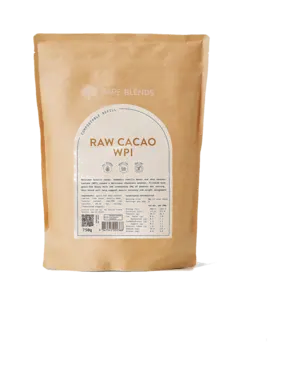
View full assessment ↗Strong provenance and a credible natural chocolate proposition, but the product is new and has limited visible consumer evidence.
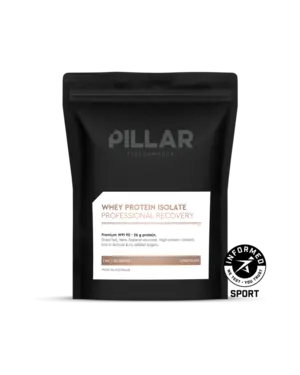
View full assessment ↗Informed Sport certification and New Zealand sourcing are strong. The lower label density and premium price reduce the score.
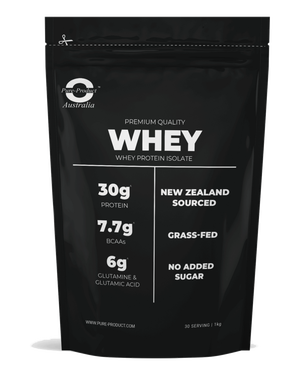
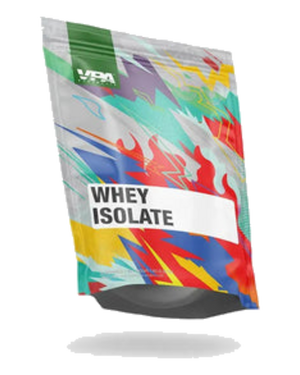
View full assessment ↗Strong protein concentration, current pricing and extensive customer feedback supported the result. VPA’s official product page showed a 4.9/5 aggregate rating from 7,138 reviews when rechecked on 16 August 2026. Sucralose, xanthan gum and limited accessible batch-level evidence reduce its clean-label and evidence scores.
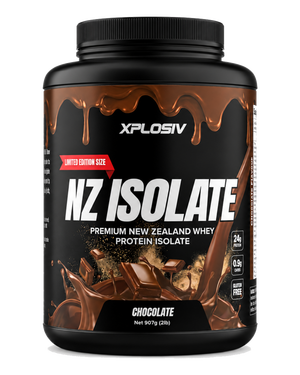
View full assessment ↗The official Chocolate panel declares 24g protein per 28g serve and 85.8g per 100g. New Zealand WPI and a naturally sweetened formula score well; limited accessible batch-level testing and customer evidence hold back the result.
View full assessment ↗Strong macros and value for performance buyers. Artificial sweeteners and a complex formula make it a weaker clean-label match.
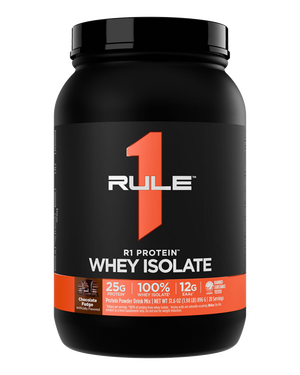
View full assessment ↗The current Chocolate Fudge record declares 25g protein in a 32g serve, equal to 78.1g per 100g. The reviewed Australian 2lb pack is A$134.95, normalised to A$148.79/kg. Informed Choice certification is a major strength; lower chocolate protein density, high local price and undisclosed dairy origin reduce the overall result.
View full assessment ↗Exceptional label density and price lead the value case. Exact dairy origin and public finished-product testing were not found.
View full assessment ↗A short whole-food formula and clear New Zealand sourcing score well. The current standard Australian price and limited finished-product testing reduce the result.
View full assessment ↗Excellent label density, New Zealand whey and a verified Australian price score well. The flavoured formula and limited public batch testing prevent a higher score.
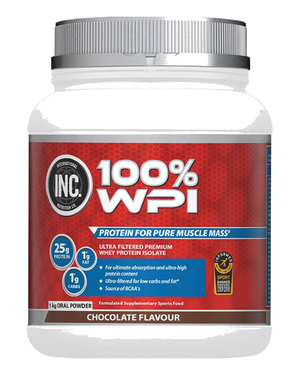
View full assessment ↗The current Chocolate record declares 35.7g protein per 40g serve, equal to 89.3g per 100g. The audited 1kg regular one-time price is A$95.96. Strong protein density and customer feedback are offset by limited public origin and finished-product testing evidence.
View full assessment ↗The Chocolate panel declares 88.3g protein per 100g and the reviewed 1.25kg Australian pack is A$134.99, equal to A$107.99/kg. Strong protein density and published nutrition support the result; added free-form aminos, sucralose and limited public finished-product testing reduce other components.
View full assessment ↗The current Chocolate listing is a 1kg bag at a regular one-time price of A$109.95, equal to A$109.95/kg and A$3.30 per 30g of powder. It declares 24g protein per 30g serve, equal to 80g per 100g, and identifies a 90.5% WPI ingredient share. Natural ingredients are a strength; accessible finished-product reports and milk origin remain incomplete.
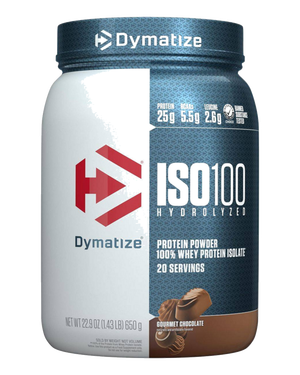
View full assessment ↗The official Gourmet Chocolate panel declares 25g protein per 32g serve, equal to 78.1g per 100g. Strong athlete testing and customer evidence are offset by lower chocolate protein density, artificial flavour/sweetener and unclear dairy origin.
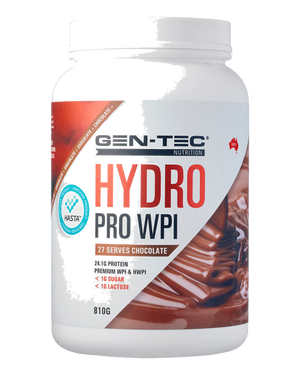
View full assessment ↗The current Chocolate 810g pack provides 24.1g protein per 30g serve, approximately 80.3g per 100g. Its regular A$139.95 price normalises to A$172.78/kg. Named NZ whey is a strength; the longer formula, limited finished-product testing evidence and high normalised price reduce the result.
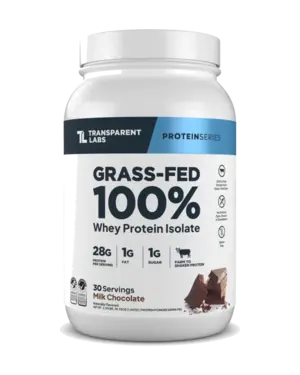
View full assessment ↗Grass-fed sourcing, third-party testing and a concise naturally sweetened formula score strongly. No comparable Australian price or verified rating and count were recorded, so value and customer experience receive zero.
View full assessment ↗The official Chocolate panel declares 24.8g protein per 32g serve and 77.5g per 100g, with 1.4g sugar per 100g. Clear New Zealand sourcing helps, but lower chocolate protein density and limited public testing evidence reduce the score.
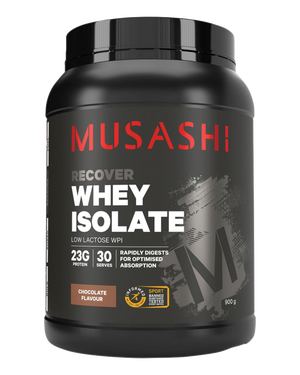
View full assessment ↗The supplied Chocolate 900g label declares 23.5g protein per 30g serve and 78.2g per 100g. Informed Sport testing is a strength; the standard RRP, lower protein density and undisclosed dairy origin reduce the result.
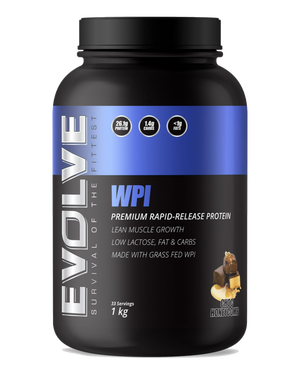
View full assessment ↗The current Choc Honeycomb pack declares 26.1g protein per 30g serve, equal to 87g per 100g. Strong protein density and value support the result; sweetener detail, dairy origin and public finished-product testing remain incomplete.
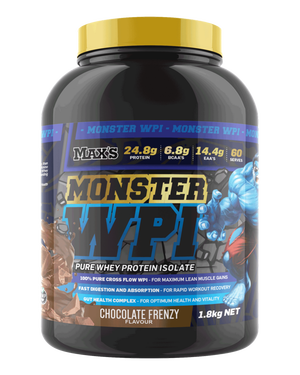
View full assessment ↗The Chocolate Frenzy record declares 24.8g protein per 30g serve, equal to 82.7g per 100g. The current 1.8kg regular price of A$189.95 normalises to A$105.53/kg; source disclosure and public finished-product testing remain limited.
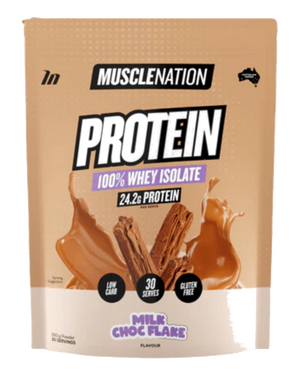
View full assessment ↗The product supplies 24.2g protein in an approximately 30g serve. Strong customer evidence is offset by limited public batch evidence, undisclosed whey origin and a flavour system with lower protein density.
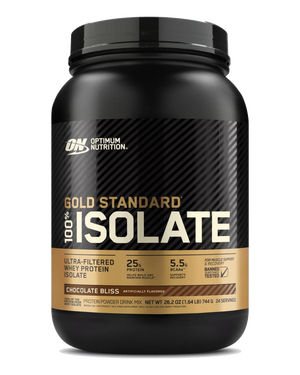
View full assessment ↗The Australian product record declares 25g protein per serve and uses isolate as the sole protein source. The current 744g Australian retailer price of A$109.95 normalises to A$147.78/kg because the brand storefront did not expose a usable price. Athlete testing is a strength; artificial flavouring and undisclosed dairy origin reduce the result.
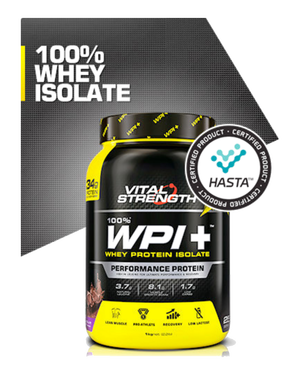
View full assessment ↗The chocolate product declares 34g protein per 40g serve, equal to 85g per 100g. HASTA certification supports testing, but price, formula complexity and undisclosed whey origin reduce the score.
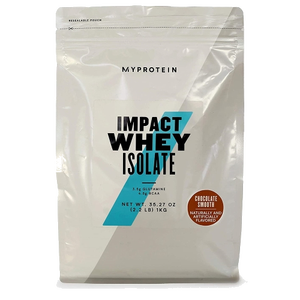
View full assessment ↗Chocolate Smooth is listed in a 1kg pack at a regular A$157.99, equal to A$157.99/kg and A$4.74 per 30g of powder. The chocolate-specific record provides approximately 24.9g protein per 30g, or 83g per 100g. Informed testing and 358 official product reviews strengthen the evidence, while its 4.03 rating, sucralose, high regular price and undisclosed dairy origin reduce the result.
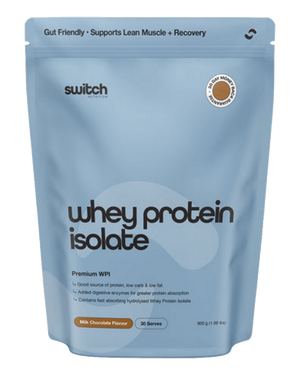
View full assessment ↗The official Milk Chocolate panel declares 84.9g protein per 100g. Natural sweetening is a strength, while three gums, undisclosed dairy origin, limited public testing and high price reduce the result.
View full assessment ↗Natural and wellness-led, but lower WPI content, added maltodextrin and a high normalised price weaken the comparison.
View full assessment ↗Informed Choice certification supports the testing score. A longer formula, imported price and undisclosed dairy origin reduce the result.
View full assessment ↗A single-source isolate and competitive local price help. Artificial sweeteners, flavour system and limited dairy-origin evidence reduce the result.
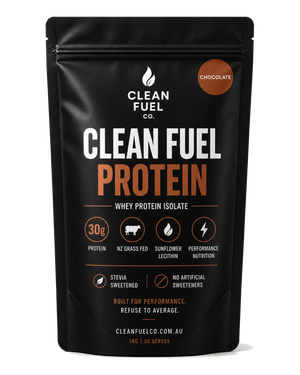
View full assessment ↗Clean Fuel declares 30g protein per serve and 30 serves in a 1kg bag, which calculates to approximately 90g protein per 100g. This is a Protein Index calculation—not a transcribed nutrition-panel value—because a complete panel is not published. Public reports and consistent sourcing still need verification.
View full assessment ↗Solid density is balanced by added free-form aminos, high standard price and incomplete dairy-origin disclosure.
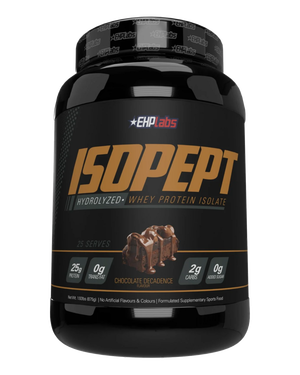
View full assessment ↗The current 875g Chocolate Decadence tub lists 25 servings and 25g protein per serve, which normalises to approximately 71.4g per 100g. Its regular A$114.95 price normalises to A$131.37/kg. Added micronutrients, unclear dairy origin and price reduce the score.
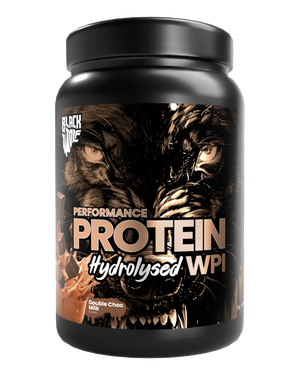
View full assessment ↗Double Choc Milk declares 25.3g protein per 30g serve, equal to 84.3g per 100g. The performance-oriented formula is transparent, but two gums, sucralose, high standard price and limited origin and batch evidence reduce the overall result.
View full assessment ↗A single isolate base and natural-origin sweetening score well. The flavoured additive system, import price and undisclosed dairy origin limit the result.
View full assessment ↗Local availability and reasonable price support value. A longer formula, two artificial sweeteners and limited sourcing evidence reduce the overall result.
View full assessment ↗Cold-filtered isolate and enzymes are positives. A comparable Australian price and verified rating with review count were not recorded; both factors receive zero.
View full assessment ↗A well-documented zero-sugar isolate is useful, but the vitamin blend, flavour system, artificial sweetener and missing local standard price lower the result.
View full assessment ↗Chocolate group: we use the closest standard chocolate WPI variant sold by each provider. Missing local prices and verified ratings receive zero for those factors; this signals incomplete evidence, not a claim about product quality. Clean Nutrition’s Chocolate and Vanilla assessments were paused on 22 September 2026. Other product evidence and public prices were previously checked 8 September 2026; prices can change. Each price uses the exact selected pack size and is normalised to one kilogram. Single-pack public prices exclude shipping, subscriptions, bundles, volume discounts and temporary promotions. Cost per 30g is the normalised price per kilogram × 0.03. Imported prices use the same published conversion basis across the Index.
We compare published nutrition, ingredients, testing evidence, cost and consumer feedback. Scores may change when product information is updated.
Short explanations to help you interpret labels, evidence and price without marketing hype.
Match the nutrition panel to the exact flavour and compare protein per 100g.
Isolate generally contains more protein and less lactose, while concentrate can offer better value.
A current finished-product report is different from a general ingredient or brand claim.
Use the same powder serving size so scoop differences do not distort value.
Check both grams per serve and the serving size—the percentage can vary by flavour.
Educational information only—not medical advice. Claims about health, recovery, performance or body composition require appropriate evidence and compliance review before publication.
This is a market-tracking list, not a list of Australian and New Zealand manufacturers. It includes local brands, international brands sold here, and some names that may be retailers or distributors rather than manufacturers.
“Not yet reviewed” means we have not collected enough current information to publish a score. It does not imply endorsement or concern.
Review the formula, protein source and evidence behind official product claims. Brand statements are not treated as independent verification.
| Flavour source | Flavour class | Sweetener | Sweetener class | Other additives | Transparency | |||||
|---|---|---|---|---|---|---|---|---|---|---|
| New Zealand | Documented | 83.1% | Organic cacao or vanilla bean | Whole-food | Thaumatin | Natural-origin | Sunflower lecithin | Full | 100/100 | |
| New Zealand | Documented | 82.4% | Cocoa + natural flavour | Natural flavour | Thaumatin | Natural-origin | Sunflower lecithin | Full | 97/100 | |
| New Zealand | Documented | 84.5% | Organic cacao | Whole-food | Thaumatin | Natural-origin | Sunflower lecithin | Full | 94/100 | |
| New Zealand | Documented | 81.3% | Raw cacao or vanilla bean | Whole-food | Stevia | Natural-origin | Sunflower lecithin | Full | 94/100 | |
| New Zealand | Documented | 78% | Natural flavour | Natural flavour | Natural sweetener | Natural-origin | Digestive enzymes | Full | 94/100 | |
| New Zealand | Claimed | 85.8% | Cocoa + natural flavour | Natural flavour | Stevia | Natural-origin | Sunflower lecithin, papain, bromelain | Full | 91/100 | |
| New Zealand | Documented | 77.6% | Natural flavour | Natural flavour | Stevia | Natural-origin | Sunflower lecithin | Full | 91/100 | |
| AU, NZ or Europe | Documented | 84% | Dutch cocoa + natural chocolate flavour | Natural flavour | Organic stevia | Natural-origin | None disclosed | Full | 86/100 | |
| United States | Documented | 82.4% | Natural flavour or unflavoured | Natural flavour | Stevia | Natural-origin | Sunflower lecithin | Full | 86/100 | |
| New Zealand | Documented | 83.2% | Cocoa + flavour | Natural flavour | Stevia | Natural-origin | Sunflower lecithin, salt | Full | 85/100 | |
| Not clearly disclosed | Claimed | 80% | Organic cacao + natural flavour | Whole-food | Stevia | Natural-origin | Sunflower lecithin | Full | 76/100 | |
| New Zealand | Documented | 77.5% | Cocoa + flavour | Undisclosed | Sucralose | Artificial | Lecithin | Full | 76/100 | |
| Australia | Claimed | 92.7% | Natural flavour | Natural flavour | Organic stevia | Natural-origin | None disclosed | Full | 76/100 | |
| New Zealand | Claimed | 90% | Cocoa or vanilla flavour | Undisclosed | Sucralose | Artificial | Flavour system | Full | 76/100 | |
| New Zealand | Claimed | 88% | Cocoa + natural flavours | Natural flavour | Not specified | Undisclosed | Not fully disclosed | Partial | 74/100 | |
| New Zealand | Claimed | 78% | Cacao, yacon + lucuma | Whole-food | Monk fruit | Natural-origin | Enzymes, maltodextrin | Full | 73/100 | |
| New Zealand | Claimed | 80.3% | Cocoa + natural flavour | Natural flavour | Sucralose | Artificial | Colostrum, guar gum, xanthan gum | Full | 73/100 | |
| New Zealand | Documented | 81% | Cocoa + natural flavour | Natural flavour | Stevia | Natural-origin | Inulin, lecithin, gum | Full | 71/100 | |
| AU or New Zealand | Conflicting | 90% | Natural chocolate flavour | Natural flavour | Stevia | Natural-origin | Sunflower lecithin | Partial | 70/100 | |
| Not disclosed | Claimed | 80.4% | Alkalised cocoa + flavour | Natural flavour | Thaumatin | Natural-origin | Xanthan gum | Full | 70/100 | |
| Not specified on the reviewed page | Claimed | 85% | Cocoa + flavour | Undisclosed | Sucralose | Artificial | Sunflower lecithin | Partial | 66/100 | |
| Not disclosed | Claimed | 84.9% | Milk chocolate flavour | Undisclosed | Stevia | Natural-origin | Cellulose, xanthan and guar gums; enzymes | Full | 64/100 | |
| Not clearly disclosed | Claimed | 88.3% | Cocoa + flavour | Undisclosed | Sucralose | Artificial | Added glutamine, arginine, soy lecithin | Full | 60/100 | |
| Not clearly disclosed | Claimed | 78.2% | Chocolate flavour | Undisclosed | Sucralose | Artificial | Flavour system | Partial | 60/100 | |
| Not clearly disclosed | Claimed | 82.7% | Cocoa + flavour | Undisclosed | Sucralose | Artificial | Digestive enzymes and probiotics | Full | 60/100 | |
| Not clearly disclosed | Claimed | 87% | Cocoa + honeycomb flavour | Undisclosed | Sucralose | Artificial | Lecithin | Full | 60/100 | |
| Not disclosed | Claimed | 80% | Natural flavour | Natural flavour | Xylitol + stevia | Natural-origin | Sunflower lecithin and xanthan gum | Full | 58/100 | |
| Not disclosed | Claimed | 89.3% | Chocolate flavour | Undisclosed | Sucralose | Artificial | Flavour system | Partial | 55/100 | |
| Not disclosed | Claimed | 83.3% | Flavour system | Undisclosed | Not clearly disclosed | Undisclosed | Added glutamine and BCAAs | Partial | 55/100 | |
| Australia and/or New Zealand | Claimed | 87% | Cocoa + flavour | Undisclosed | Sucralose | Artificial | Soy lecithin, xanthan gum | Full | 54/100 | |
| Not clearly disclosed | Claimed | 80.7% | Milk chocolate flavour | Undisclosed | Sucralose | Artificial | Flavour system | Full | 54/100 | |
| Not disclosed | Claimed | 78.1% | Cocoa + flavour | Artificial flavour | Artificial sweeteners | Artificial | Soy lecithin | Partial | 52/100 | |
| Not disclosed | Claimed | 83% | Cocoa + flavour | Undisclosed | Sucralose | Artificial | Soy lecithin | Full | 47/100 | |
| Not disclosed | Claimed | 85% | Chocolate flavour | Undisclosed | Sucralose | Artificial | Guar gum, anticaking agent, vitamins and minerals | Full | 46/100 | |
| Not disclosed | Claimed | 78.1% | Cocoa + flavour | Artificial flavour | Sucralose + stevia | Artificial | Soy lecithin, potassium chloride | Full | 46/100 | |
| Not disclosed | Claimed | 80.9% | Cocoa + flavour | Artificial flavour | Sucralose | Artificial | Soy lecithin | Full | 46/100 | |
| Not disclosed | Claimed | 83.3% | Flavour system | Undisclosed | Sucralose | Artificial | IGNITOR enzyme system | Full | 46/100 | |
| AU, NZ and/or USA | Conflicting | 87% | Chocolate flavouring | Undisclosed | Sucralose + Ace-K | Artificial | Enzymes, anticaking agent | Full | 45/100 | |
| Not disclosed | Claimed | 82.5% | Flavour system | Undisclosed | Sucralose | Artificial | Enzymes and probiotic | Full | 43/100 | |
| Not disclosed | Claimed | 80% | Natural and artificial flavours | Artificial flavour | Sucralose + Ace-K | Artificial | Soy or sunflower lecithin | Full | 43/100 | |
| Not disclosed | Claimed | 71.4% | Chocolate flavour | Undisclosed | Sucralose | Artificial | Digestive enzymes, vitamins and minerals | Full | 40/100 | |
| Not disclosed | Claimed | 84.3% | Cocoa + flavour | Undisclosed | Sucralose | Artificial | Xanthan gum, guar gum, enzymes, probiotic, chromium | Full | 40/100 | |
| Not disclosed | Claimed | 78.1% | Natural and artificial flavours | Artificial flavour | Sucralose | Artificial | Vitamin and mineral blend | Full | 40/100 | |
| Not disclosed | Claimed | 78.1% | Natural and artificial flavours | Artificial flavour | Sucralose + Ace-K | Artificial | Creamer, gums and lecithin | Full | 34/100 |

It describes where an ingredient comes from—not proof that it is healthier, safer or less processed. Approved artificial sweeteners are treated as a preference trade-off, not automatically as a safety concern.
Combined score: ingredient simplicity 30%, milk-origin disclosure 20%, grass-fed evidence 15%, flavour and sweetener profile 15%, protein concentration 10%, manufacturing disclosure 10%.
The Index Score summarises six factors using available product information. It is not a safety certification, medical recommendation or guarantee of suitability.
View scoring methodology ↗