
Are Plastic Protein Shakers Safe? 5 Things to Know
You compare the ingredients in your protein powder. What about the bottle you shake it in?
A recent experiment found that a metal mixing ball can rub against a plastic shaker and release tiny plastic particles. That gives us a reason to look more closely at materials. It does not establish that your daily shake is causing harm.
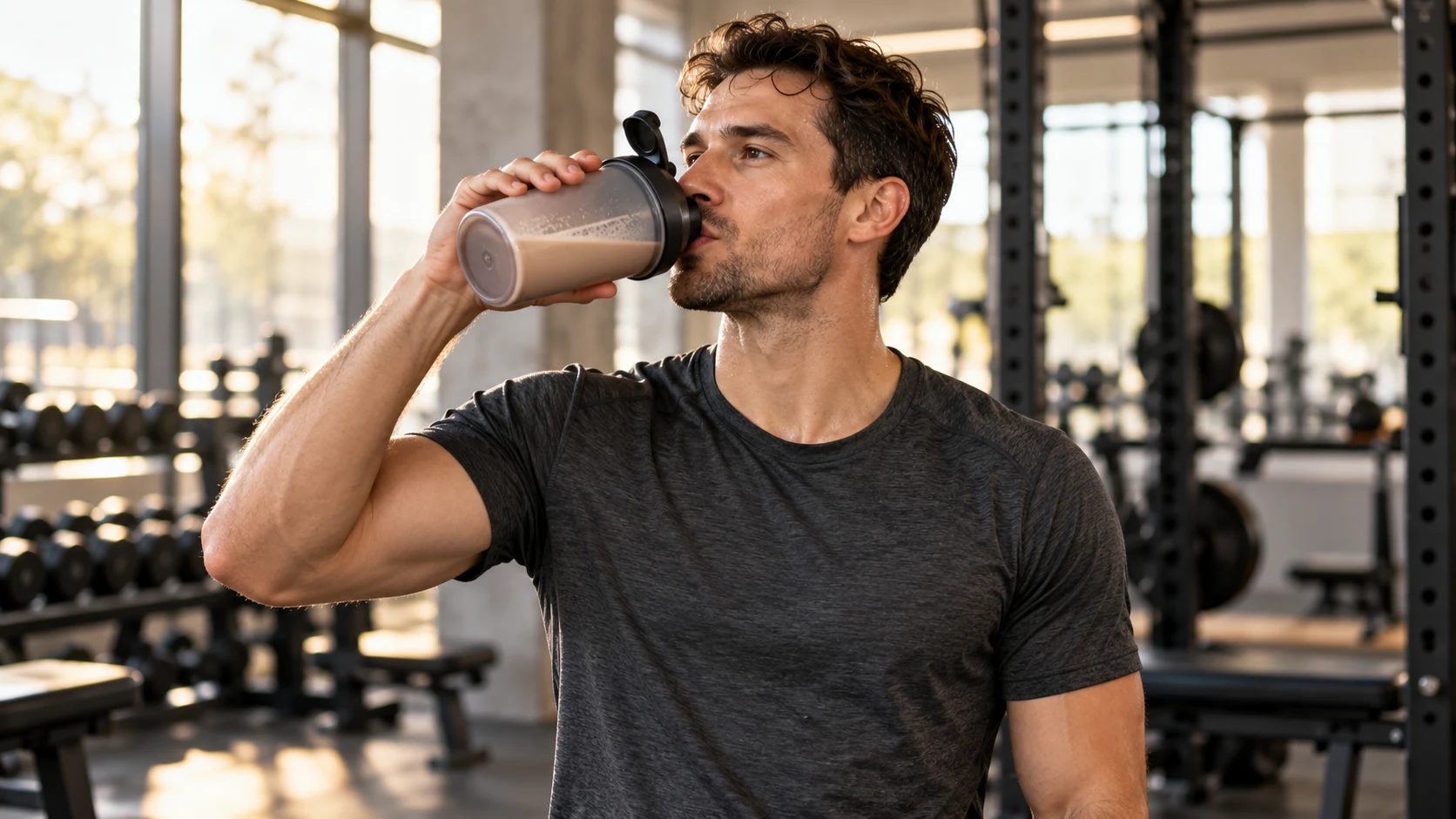
Some plastic shakers release microplastics during shaking, and some reusable bottles release chemicals into drinks. The amount depends on the material and conditions. Whether ordinary shaker use causes illness remains unproven. An uncoated stainless-steel body removes the plastic bottle wall from that abrasion pathway; the rest of the bottle still matters.
Our commercial interest: 1% Better is developing a stainless-steel shaker with powder storage. We may benefit if readers join its launch list or buy it later. The research below did not test our planned shaker, and its final materials and performance are not yet confirmed.
1. The mixing ball can wear against the plastic
A 2026 laboratory study tested polypropylene, polycarbonate and Tritan shaker bottles under user-relevant and controlled shaking conditions.
All tested bottles released measurable microplastics without a ball, which the researchers attributed to pre-existing manufacturing residues. Adding a stainless-steel mixing ball increased release through abrasion against the plastic wall.
Release varied by plastic type, shaking method and stage of use, and generally increased with continued use. This is evidence about the tested bottles and conditions, not a measurement of every shaker on sale.
2. “BPA-free” does not mean “particle-free”
BPA is a chemical. Microplastics are particles. These are different questions, so a BPA-free label cannot tell you whether a bottle sheds particles when shaken.
The shaker experiment included polypropylene and Tritan as well as polycarbonate. Check the exact material and the product’s testing rather than treating one label as a complete safety assessment. See the materials tested.
3. Cleaning and storage conditions matter
In a separate 2022 study of reusable plastic sports bottles, researchers analysed water stored for 24 hours. They detected plastic-related compounds, and dishwashing generally increased their migration.
This was not a trial of freshly mixed protein shakes. Detecting a chemical also does not establish a harmful dose.
Food Standards Australia New Zealand identifies temperature, contact time, food composition and cleaning as factors affecting migration. Use food-safe, undamaged containers and follow the manufacturer’s heating and dishwasher instructions.
4. Particle release is not proof of illness
The shaker study measured particle release and estimated exposure. It did not follow users to establish health effects.
The US Food and Drug Administration says current evidence does not demonstrate that microplastic levels detected in food pose a human-health risk. It also highlights gaps in measurement methods and research.
That leaves uncertainty. It supports a discussion about reducing avoidable exposure, not claims that plastic shakers cause cancer, infertility or hormone problems.
5. Compare the whole shaker, not just the body
A stainless-steel body is not a plastic wall, so it avoids that particular source of plastic-wall wear. That is a material-based inference, not a proven health benefit or a guarantee of zero microplastics in your drink.
Before choosing a shaker, ask:
- What touches the drink? Check the body, interior coating, lid, spout, mixer and seals.
- What has been tested? Look for evidence covering the finished product and its intended use, not just a “food-grade” slogan.
- Can you clean it properly? Accessible parts and clear care instructions matter whatever the material.
- Does it work for your routine? Compare weight, capacity, leaks, mixing and powder storage alongside materials.
You do not need to panic about an existing plastic shaker. Follow its care instructions and replace damaged parts. If reducing plastic contact is a priority, examine the complete design of the alternative.
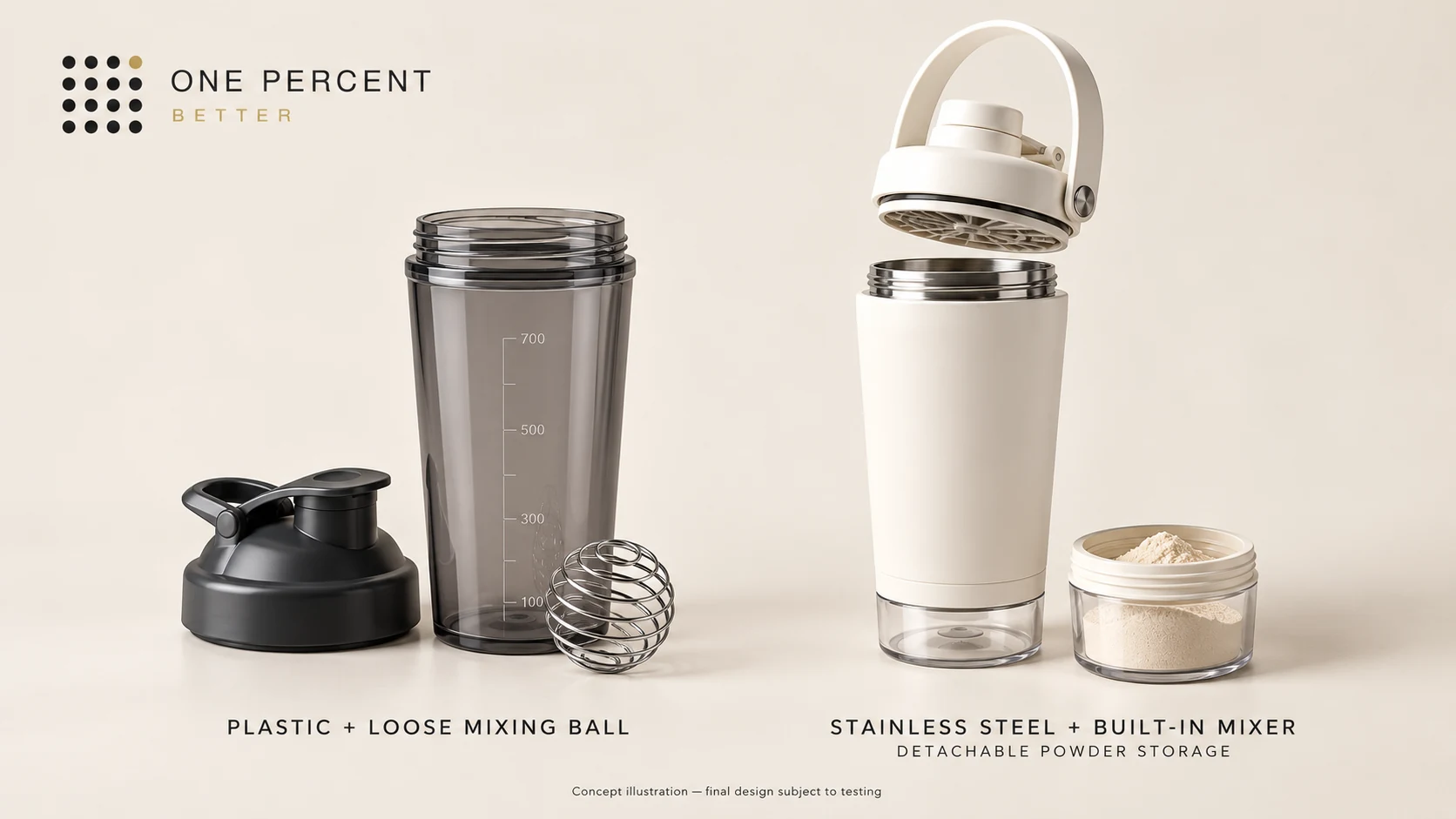
A stainless-steel shaker with separate powder storage
We are developing a 2-in-1 shaker so you can carry your powder separately and mix it when you are ready. Stainless steel is the planned body material; final components, mixing performance and other specifications will be confirmed through sample testing.
Expected launch price: $49.90 AUD. Joining is free and is an expression of interest, not a preorder. No payment is taken.
Join the shaker launch listChoosing what goes inside your shaker? Use our whey protein buying checklist or compare the Creatine Index.
Sources and further reading
- Yang and colleagues, 2026 — laboratory study of particle release from plastic shaker bottles; not a human health-outcome study ↗
- Tisler and Christensen, 2022 — chemical migration into water stored in reusable plastic sports bottles for 24 hours ↗
- FDA — microplastics in foods, current health-evidence limits and measurement gaps ↗
- FSANZ — food-contact materials, migration factors and practical use guidance ↗
Published by 1% Better. Founded by Shirley Zu. How we research and prepare our content.